Understanding Address Poisoning in Web3: An Incredible Case Study
A deep dive into a shocking incident of address poisoning in the Web3 space, revealing how a tiny transaction led to massive financial loss in minutes.
Understanding Address Poisoning in Web3: An Incredible Case Study
In the dynamic world of Web3, security vulnerabilities can emerge in unexpected forms. An alarming incident reported by Web3 Antivirus exemplifies the intricate dangers associated with address poisoning—a method that can lead to devastating financial consequences.
The Incident Overview
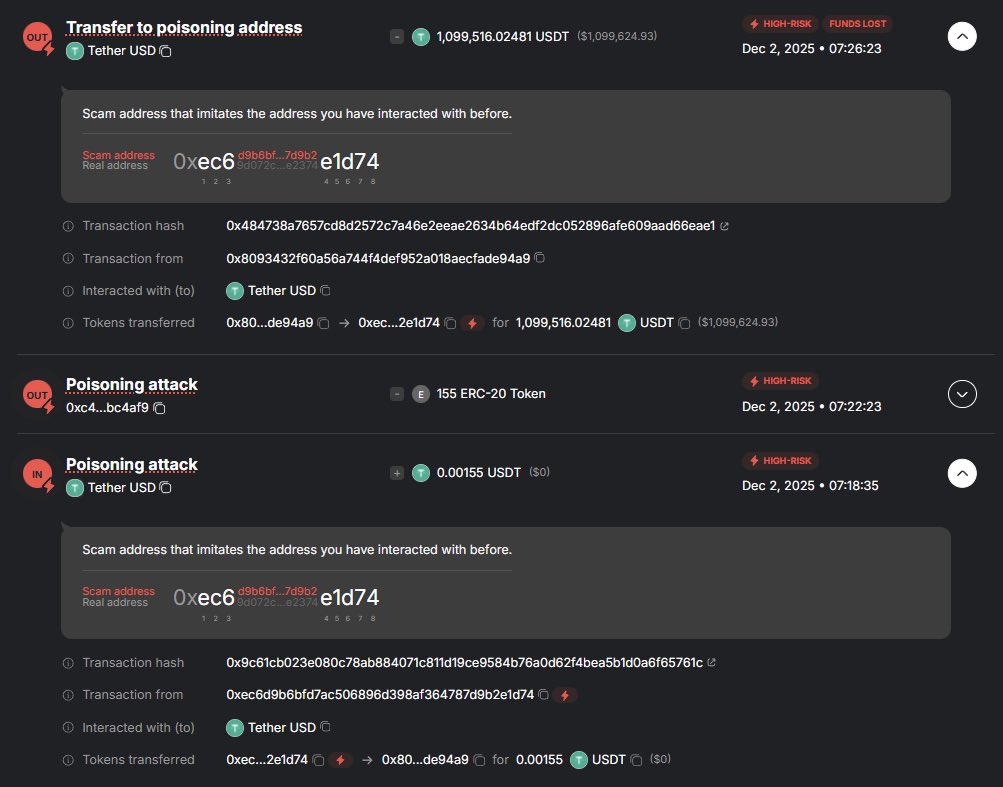
According to Web3 Antivirus, a mere $0.0015 dust transaction initiated an astounding ROI of 733,000,000x in just 8 minutes. This dramatic statistic highlights how a trivial interaction within the blockchain network can yield outsized negative impacts. The dust transaction essentially poisoned the transaction history, leading to a subsequent transfer of $1.1 million to a fake address.
What is Address Poisoning?
Address poisoning is a strategy employed by malicious actors to manipulate the transaction history associated with cryptocurrency addresses. Here's a simplified breakdown of the process:
- Dusting: The attacker sends a tiny amount of cryptocurrency (known as dust) to a target address. This transaction alters the address's transaction history.
- Exploitation: Once the data is skewed, the attackers can exploit follow-up transactions, redirecting funds to their controlled addresses without arousing immediate suspicion.
The Victim
In this case, the original victim's transaction can be investigated further through Etherscan. The incident serves as a reminder of the vulnerabilities present in the cryptocurrency space and the critical need for vigilance.
Lessons Learned
- Stay Informed: Understanding the threats in the Web3 space is crucial for all participants, from developers to investors.
- Verify Transactions: Always double-check transaction histories when dealing with unfamiliar addresses or smaller transactions.
- Use Security Tools: Employ security solutions that monitor for unusual activities and alert users of potential vulnerabilities.
This incident underscores the importance of being cautious in the rapidly evolving landscape of Web3 technologies. While innovation promises exciting prospects, it is essential to navigate with care to safeguard assets against emerging threats.